
Sustainable Printing Takes a Major Step Forward with BIOND Bio-Based Films
The large-format printing industry is under increasing pressure to deliver high-quality visual communications while reducing its environmental impact. As sustainability moves from a desirable attribute to a business necessity, innovative materials are helping print providers meet the expectations of environmentally conscious brands without compromising performance.
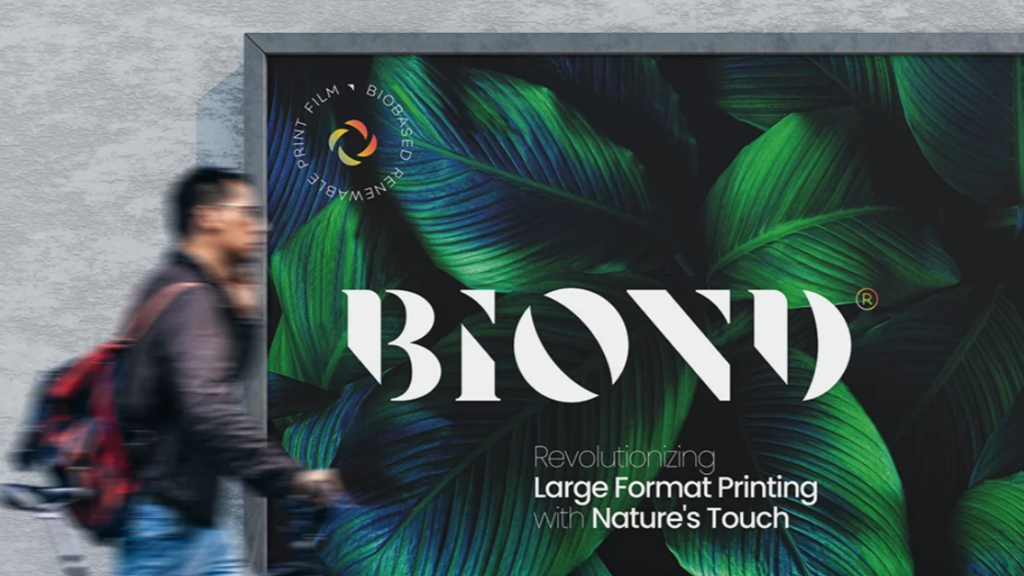
One of the most significant recent developments in this space is the introduction of BIOND, a groundbreaking range of bio-based films developed by Digidelta. Originally featured by LFR News (Large Format Review), the BIOND range demonstrates how sustainable innovation can support the future of visual communications and large-format printing.
How Sustainable Printing Is Driving Innovation in Large-Format Graphics
Developed entirely in-house by Digidelta, a company with more than four decades of manufacturing expertise, BIOND represents a new generation of print media designed to reduce environmental impact while maintaining the durability and print quality demanded by professional applications.
The films contain more than 85% bio-based content and are manufactured using a patented carbon-neutral design. They are also free from volatile organic compounds (VOCs), phthalates, and chlorine, making them a cleaner alternative to many traditional film products. As businesses increasingly prioritise environmental responsibility, innovations like BIOND demonstrate how sustainable printing can deliver both performance and environmental benefits.
The Role of Bio-Based Films in Sustainable Printing
What makes BIOND particularly relevant to the signage, graphics, and visual communications sectors is its versatility. The product range includes printing films, protection films, décor films, and glass décor solutions, offering print providers a broad selection of sustainable materials for a variety of applications.
From retail graphics and point-of-sale displays to wall décor, window graphics, exhibition environments, and branded interiors, BIOND enables businesses to incorporate sustainable printing practices into projects without sacrificing visual impact. This flexibility is becoming increasingly important as organisations seek environmentally responsible alternatives across their marketing and branding activities.
Advancing Sustainable Printing Through Responsible Manufacturing
Beyond the material composition itself, Digidelta has also focused on sustainable manufacturing practices. Production is supported by facilities powered largely by solar energy, while water-based adhesives further reduce environmental impact throughout the manufacturing process.
The company has invested significantly in expanding its production capabilities in Portugal, reinforcing its commitment to long-term sustainable growth and innovation. These investments demonstrate that sustainable printing is not simply about replacing materials but also about improving the entire production ecosystem behind them.
Meeting Customer Demand Through Sustainable Printing Technologies
For print service providers, the introduction of bio-based alternatives such as BIOND creates new opportunities to support clients’ environmental goals. Many brands are actively seeking ways to reduce the carbon footprint of their marketing campaigns, retail environments, and promotional materials.
By offering sustainable printing solutions, print businesses can differentiate themselves in a competitive marketplace while helping customers align with their own sustainability commitments. This growing demand is creating new opportunities for printers who can provide environmentally responsible alternatives without compromising quality or application versatility.
Importantly, the move toward environmentally responsible materials no longer requires a compromise in performance. BIOND films have been engineered for professional digital printing applications, delivering the print quality, consistency, and durability required for modern visual communication projects.
The Future of Sustainable Printing in the Large-Format Industry
At Midcomp Consumables, we continue to monitor innovations that help our customers embrace more sustainable printing practices. Technologies and materials like BIOND demonstrate that the future of large-format printing is not only about producing exceptional graphics but also about doing so responsibly.
As demand for environmentally conscious solutions continues to grow, bio-based media innovations are likely to play an increasingly important role in shaping the next generation of print applications. Sustainable printing is no longer a future trend—it is a present-day business requirement.
Developments such as Digidelta’s BIOND range show that the printing industry is ready to meet that challenge with practical, high-performance solutions that support both commercial success and environmental responsibility.
Source: Adapted from reporting originally published on June 2nd, 2026, by LFR News (Large Format Review).