
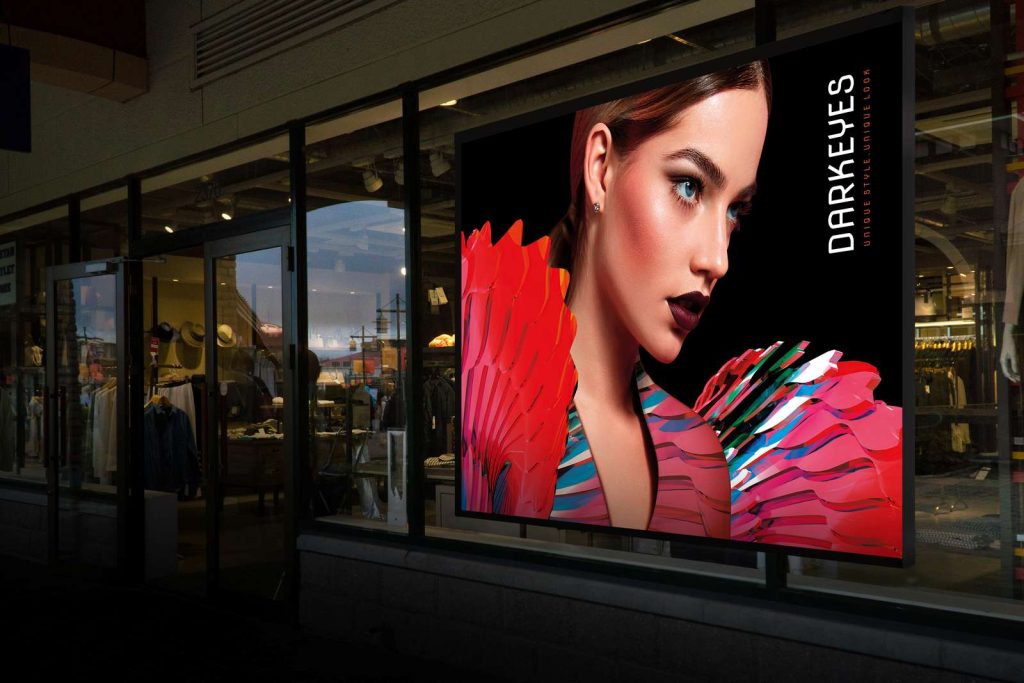
For South African print businesses looking to expand their services, soft signage printing offers an exciting opportunity to move beyond traditional signage and explore new applications in fabric graphics. From retail displays and exhibition stands to events and branded interiors, printed textiles combine visual impact, versatility and practical display solutions.
As businesses look for fresh ways to promote their brands and create memorable spaces, soft signage gives print providers an opportunity to broaden their product offering, reach new markets and generate additional revenue.
With advanced textile printing technology from manufacturers such as HP and DGI, businesses can explore new production possibilities and meet the growing demand for high-quality fabric graphics.
What Is Soft Signage?
Soft signage refers to printed graphics produced on textile or fabric materials rather than traditional rigid substrates. These graphics are commonly used in display frames, exhibition stands, retail environments, event branding and interior applications.
One of the biggest attractions of soft signage is its appearance. Fabric graphics can offer a smooth, seamless-looking finish with vibrant colours and detailed imagery. They are also lightweight and flexible, making them practical for applications where displays need to be transported, assembled or updated regularly.
Popular soft signage applications include:
- Retail displays: Promotional graphics, window displays and in-store branding.
- Exhibitions and events: Backdrops, display walls, branded stands and promotional environments.
- Corporate branding: Reception areas, office interiors and branded spaces.
- Backlit displays: Illuminated fabric graphics that help colours and imagery stand out.
- Indoor advertising: Banners, promotional displays and large-format fabric graphics.
For print businesses, these applications create opportunities to serve customers across different industries while offering an alternative to conventional signage products.
Why Is Soft Signage Worth Exploring?
Soft signage offers several practical and creative advantages that make it an attractive addition to a print business’s product range.
Versatility and creative freedom
Fabric graphics can be produced in different formats and sizes, making them suitable for a wide range of display environments. From compact promotional displays to large exhibition backdrops, businesses can offer customised solutions to suit their clients’ needs.
Lightweight and portable displays
Compared with many rigid display materials, fabric graphics can be easier to transport, handle and store. This is particularly useful for exhibition companies, event organisers and businesses that regularly update promotional displays.
High-impact visual presentation
Modern textile printing technology enables vibrant graphics, detailed imagery and consistent colour reproduction. This is especially important for brand-focused applications where colours and visual quality need to remain consistent.
Opportunities for repeat business
Retail promotions, seasonal campaigns, exhibitions and events often require updated graphics. This creates opportunities for print businesses to supply replacement fabric graphics and ongoing promotional materials.
The Technology Behind Soft Signage
Producing quality soft signage requires printing technology suited to the intended fabric, application and production volume.
Two important approaches are dye-sublimation and direct-to-textile printing.
Dye-sublimation printing uses heat to transfer dye into suitable polyester-based materials. Depending on the workflow, graphics can be printed onto transfer paper before being transferred to fabric or printed directly onto suitable fabric and then heat-fixed.
Direct-to-textile printing applies ink directly onto the fabric. The appropriate ink technology, fabric preparation and finishing process depend on the printer and intended application.
Understanding these differences helps businesses select equipment that matches their production requirements, media preferences and target markets.
HP Stitch S1000: Industrial Productivity for Soft Signage
For businesses looking to expand into high-volume soft signage production, the HP Stitch S1000 offers an industrial dye-sublimation printing solution.
With a maximum print width of 3.2m and print speeds of up to 220m²/hr, the HP Stitch S1000 is designed for demanding textile production environments. It supports both direct-to-fabric printing and transfer-paper printing, giving businesses flexibility when selecting their production workflow.
Key features include:
- High production speeds: Print speeds of up to 220m²/hr support high-volume production requirements.
- Wide-format capability: A maximum print width of 3.2m makes it suitable for large fabric graphics.
- Colour consistency: Integrated spectrophotometers help maintain accurate, repeatable colour.
- Smart printhead technology: Automated printhead maintenance and HP Smart Nozzle Compensation help support reliable production.
- Flexible media handling: Supports 100% polyester fabrics and dye-sublimation transfer paper rolls.
For South African businesses producing exhibition graphics, retail displays, backdrops and large-format fabric applications, the HP Stitch S1000 combines production capacity, colour control and workflow flexibility.
DGI Textile Printers: Versatile Fabric Printing Solutions
Midcomp also offers a range of DGI textile printers, designed for different fabric printing requirements, production environments and applications.
With technologies covering dye-sublimation, pigment and hybrid printing, the DGI range gives businesses options when exploring soft signage and wider textile production.
Some of the models worth exploring include:
DGI Artemis Grande
Designed specifically for soft signage applications, the Artemis Grande offers a maximum print width of 3,250mm and print speeds of up to 200m²/hr. Its wide-format capability makes it particularly relevant for businesses producing large fabric graphics and display applications.
DGI Teleios Hexa
Another dedicated soft signage textile printer, the Teleios Hexa offers a maximum print width of 1,830mm and speeds of up to 77m²/hr. It features six-colour or five-colour configurations with optional SPC, depending on the setup.
DGI Hercules II
The Hercules II is a dye-sublimation textile printer with a maximum print width of 1,600mm and speeds of up to 130m²/hr. It provides an option for businesses producing polyester-based fabric graphics.
DGI Artrix Prime
The Artrix Prime is a direct pigment textile printer with a maximum print width of 2,000mm and an eight-colour configuration. It offers another approach for businesses looking to explore direct-to-textile production.
With different printing technologies, widths and configurations available, the DGI range allows businesses to investigate a solution suited to their fabric requirements, production volumes and intended applications.
The Business Opportunity for South African Print Providers
For South African print businesses, expanding into soft signage can create opportunities to work with customers beyond traditional signage and banner production.
Retailers require promotional graphics and branded displays. Exhibition and event companies need large-format visual elements that can be transported and installed. Corporate clients may require branded interiors, backdrops and display graphics.
By offering fabric-based solutions, print providers can broaden their product range and respond to these varied requirements.
Soft signage can also complement existing large-format printing services. Businesses that already produce vinyl graphics, banners and rigid signage may be able to introduce fabric displays as an additional option for customers.
The opportunity is not simply about investing in another printer. It is about identifying new applications, building relationships with customers and offering solutions that meet changing display and branding requirements.
Making the Most of Your Soft Signage Investment
Choosing the right textile printer involves more than comparing maximum print speeds or print widths. Businesses should consider the types of fabric they intend to print, whether they require direct-to-textile or transfer-paper workflows, expected production volumes, colour requirements and available finishing equipment.
The complete production process also matters. Fabric handling, heat fixation where required, cutting, sewing, frame systems and installation all contribute to the finished product.
Sustainability is another consideration. For example, the HP Stitch S1000 uses water-based dye-sublimation inks. Businesses can also investigate material choices, production efficiency and waste management when developing their textile printing offering.
The right combination of printing technology, materials and finishing capabilities can help businesses deliver complete soft signage solutions rather than simply supplying printed fabric.
Unlock New Opportunities with Midcomp
Soft signage offers South African print businesses an exciting opportunity to diversify their services, explore new creative applications and meet the changing needs of their customers.
Whether you’re considering the industrial productivity of the HP Stitch S1000 or exploring the versatility of the DGI textile printer range, Midcomp can help you investigate the right technology for your business.
Ready to take your print offering in a new direction? Contact Midcomp to explore HP Stitch and DGI textile printing solutions and discover the possibilities of soft signage.